Soundscapes and Architecture — a New Love Affair or a Long-Term Relationship? Part II
Published by Emilie under αρχιτεκτονική, ηχοτοπία, μουσική, περιβάλλον, PhD, Research, soundscape, World Listening Project on Πέμπτη, Ιουνίου 06, 2013
Original post can be found here
But do we tend to associate certain sounds with certain rooms? Do the spaces speak?
 It is a common knowledge that we experience places not only by seeing but also by listening. In Spaces Speak, Are You Listening?, Barry
Blesser and Linda- Ruth Salter take advance of his long career in audio
engineering and her experience regarding space, and they examine
auditory spatial awareness. They introduce the notion of aural
architecture, integrating contributions from a wide range of disciplines
such as architecture, music, acoustics, psychology, art and many
others. According to them, when we think of architecture, we tend to
visualize the properties of space that can be seen, especially
boundaries like walls and surfaces. In contrast, aural architecture has
aural boundaries. Moreover, the aural and acoustic attributes of a space
have an influence on the moods and feeling of those who inhabit it.
Searching for a certain high-impact space is easier than trying to
construct it, since it is impossible to auralize a space that has never
been experienced. So, it is obvious that we tend to listen to the unique
voice of certain spaces but without realizing it most of the times.
It is a common knowledge that we experience places not only by seeing but also by listening. In Spaces Speak, Are You Listening?, Barry
Blesser and Linda- Ruth Salter take advance of his long career in audio
engineering and her experience regarding space, and they examine
auditory spatial awareness. They introduce the notion of aural
architecture, integrating contributions from a wide range of disciplines
such as architecture, music, acoustics, psychology, art and many
others. According to them, when we think of architecture, we tend to
visualize the properties of space that can be seen, especially
boundaries like walls and surfaces. In contrast, aural architecture has
aural boundaries. Moreover, the aural and acoustic attributes of a space
have an influence on the moods and feeling of those who inhabit it.
Searching for a certain high-impact space is easier than trying to
construct it, since it is impossible to auralize a space that has never
been experienced. So, it is obvious that we tend to listen to the unique
voice of certain spaces but without realizing it most of the times.
But what happens when we leave our home? How we tend to aurally experience the city? The French philosopher and phenomenologist Jean- Francois Augoyard at the Centre de researche sur l’espace sonore et l’ environment urbain (CRESSON) at the National School of Architecture of Grenoble and lead soundscape researcher, makes an innovative approach. In his book, Sonic experience, a guide on everyday sounds, he introduces the notion of sonic effect, and he provides a sourcebook full of auditory examples with a distinctive architectural and urban context. Nevertheless, he clearly uses the notion of R. Murray’s soundscape and Pierre Schaeffer’s sound object. Augoyard believes that never before has the everyday contemporary soundtrack of urban space been so cacophonous, and he hopes to enrich our understanding of what it is to listen and the role sound plays to our environment.
 Following the same path with CRESSON Bjorn Hellstrom, the writer of Noise Design: Architectural Modelling and the Aesthetics of Urban Acoustic Space,
takes a structural approach to urban acoustic space. While most
regulations adopt a defensive attitude towards noise, as unwanted sound,
Hellstrom believes that urban noise, transient and immaterial as it is,
makes public and private space less predictable and less monotonous,
having a direct connection to transparent and fluid space, which is a
central principle of contemporary architectural composition.
Following the same path with CRESSON Bjorn Hellstrom, the writer of Noise Design: Architectural Modelling and the Aesthetics of Urban Acoustic Space,
takes a structural approach to urban acoustic space. While most
regulations adopt a defensive attitude towards noise, as unwanted sound,
Hellstrom believes that urban noise, transient and immaterial as it is,
makes public and private space less predictable and less monotonous,
having a direct connection to transparent and fluid space, which is a
central principle of contemporary architectural composition.

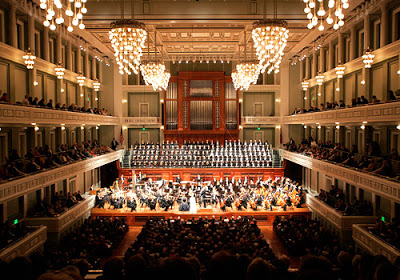
 But is this transformation
of the contemporary urban soundscape in the Western World, the result
of major cultural and technological changes that took place in the
beginning of 20th century? Emily Thomson, in her book The Soundscape of Modernity: Architectural Acoustics and the Culture of Listening in America, 1900-1933, agrees that the dramatic transformations in what people heard and how they listened, were the result of the prevalence of a new
aural culture. The new sound of the modern technology changed radically
the experience of sonic space. This is a fact that you can visually
notice for example when you experience the architecture of Boston’s
Symphony Hall, which was built in 1900s and the architecture of Radio
City Music Hall, which was built in the 1930’s. The architectural
composition of these two stages is mainly the result of acoustics but
its function changes entirely in these two cases.
But is this transformation
of the contemporary urban soundscape in the Western World, the result
of major cultural and technological changes that took place in the
beginning of 20th century? Emily Thomson, in her book The Soundscape of Modernity: Architectural Acoustics and the Culture of Listening in America, 1900-1933, agrees that the dramatic transformations in what people heard and how they listened, were the result of the prevalence of a new
aural culture. The new sound of the modern technology changed radically
the experience of sonic space. This is a fact that you can visually
notice for example when you experience the architecture of Boston’s
Symphony Hall, which was built in 1900s and the architecture of Radio
City Music Hall, which was built in the 1930’s. The architectural
composition of these two stages is mainly the result of acoustics but
its function changes entirely in these two cases.
The result of this journey is that; the connection between soundscapes and architecture is not a new but an ancient one. While the soundscape of the world changes, as R. Murray Schafer has stated in his book that introduced the notion of soundscape, modern man should learn to inhabit a world with an acoustic environment radically different from any other era. I believe that contemporary architects should stop designing for people without senses and focus on real space rather than space constructed by bits!
References:
Blesser, Barry and Linda-Ruth Salter. Spaces Speak, Are You Listening?: Experiencing aural architecture. Cambridge: The MIT Press, 2007. Print.
Auguyard, Jean-Francois and Henry Torgue. Sonic experience, a guide on everyday sounds. Quebec: McGill- Queen’s University Press, 2005. Print.
Hellstrom, Bjorn. Noise Design: Architectural Modelling and the Aesthetics of Urban Acoustic Space. (Doctoral Dissertation, School of Architecture, Royal Institute of Technology, KTH) Gotenborg: Reproman AB, 2003. Print.
Thomson, Emily. The Soundscape of Modernity: Architectural Acoustics and the Culture of Listening in America, 1900-1933. Cambridge: The MIT Press, 2004. Print.
Schafer, R. Murray. The Soundscape: Our Sonic Environment and the Tuning of the World. Vermont: Destiny Books, 1977,1994. Print
Picture sources:
http://en.wikipedia.org/wiki/The_Enraged_Musician
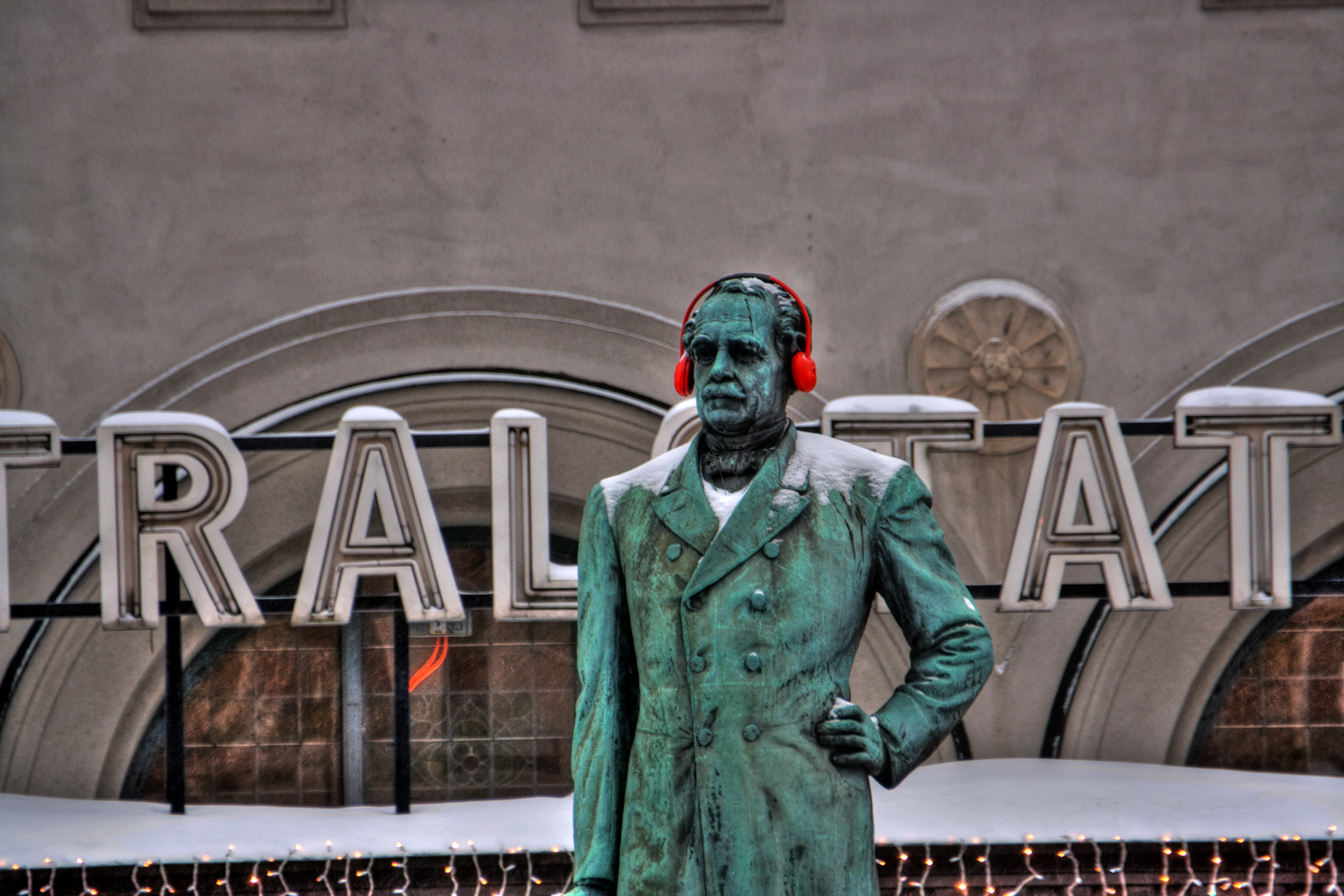
Second photograph is courtesy of Alex Stogiannis; Stockholm’s central station January 2013.
http://bicycleresearchproject.blogspot.gr/2013/01/18-emily-thompsons-soundscape-of.html
But do we tend to associate certain sounds with certain rooms? Do the spaces speak?
 It is a common knowledge that we experience places not only by seeing but also by listening. In Spaces Speak, Are You Listening?, Barry
Blesser and Linda- Ruth Salter take advance of his long career in audio
engineering and her experience regarding space, and they examine
auditory spatial awareness. They introduce the notion of aural
architecture, integrating contributions from a wide range of disciplines
such as architecture, music, acoustics, psychology, art and many
others. According to them, when we think of architecture, we tend to
visualize the properties of space that can be seen, especially
boundaries like walls and surfaces. In contrast, aural architecture has
aural boundaries. Moreover, the aural and acoustic attributes of a space
have an influence on the moods and feeling of those who inhabit it.
Searching for a certain high-impact space is easier than trying to
construct it, since it is impossible to auralize a space that has never
been experienced. So, it is obvious that we tend to listen to the unique
voice of certain spaces but without realizing it most of the times.
It is a common knowledge that we experience places not only by seeing but also by listening. In Spaces Speak, Are You Listening?, Barry
Blesser and Linda- Ruth Salter take advance of his long career in audio
engineering and her experience regarding space, and they examine
auditory spatial awareness. They introduce the notion of aural
architecture, integrating contributions from a wide range of disciplines
such as architecture, music, acoustics, psychology, art and many
others. According to them, when we think of architecture, we tend to
visualize the properties of space that can be seen, especially
boundaries like walls and surfaces. In contrast, aural architecture has
aural boundaries. Moreover, the aural and acoustic attributes of a space
have an influence on the moods and feeling of those who inhabit it.
Searching for a certain high-impact space is easier than trying to
construct it, since it is impossible to auralize a space that has never
been experienced. So, it is obvious that we tend to listen to the unique
voice of certain spaces but without realizing it most of the times.But what happens when we leave our home? How we tend to aurally experience the city? The French philosopher and phenomenologist Jean- Francois Augoyard at the Centre de researche sur l’espace sonore et l’ environment urbain (CRESSON) at the National School of Architecture of Grenoble and lead soundscape researcher, makes an innovative approach. In his book, Sonic experience, a guide on everyday sounds, he introduces the notion of sonic effect, and he provides a sourcebook full of auditory examples with a distinctive architectural and urban context. Nevertheless, he clearly uses the notion of R. Murray’s soundscape and Pierre Schaeffer’s sound object. Augoyard believes that never before has the everyday contemporary soundtrack of urban space been so cacophonous, and he hopes to enrich our understanding of what it is to listen and the role sound plays to our environment.
 Following the same path with CRESSON Bjorn Hellstrom, the writer of Noise Design: Architectural Modelling and the Aesthetics of Urban Acoustic Space,
takes a structural approach to urban acoustic space. While most
regulations adopt a defensive attitude towards noise, as unwanted sound,
Hellstrom believes that urban noise, transient and immaterial as it is,
makes public and private space less predictable and less monotonous,
having a direct connection to transparent and fluid space, which is a
central principle of contemporary architectural composition.
Following the same path with CRESSON Bjorn Hellstrom, the writer of Noise Design: Architectural Modelling and the Aesthetics of Urban Acoustic Space,
takes a structural approach to urban acoustic space. While most
regulations adopt a defensive attitude towards noise, as unwanted sound,
Hellstrom believes that urban noise, transient and immaterial as it is,
makes public and private space less predictable and less monotonous,
having a direct connection to transparent and fluid space, which is a
central principle of contemporary architectural composition.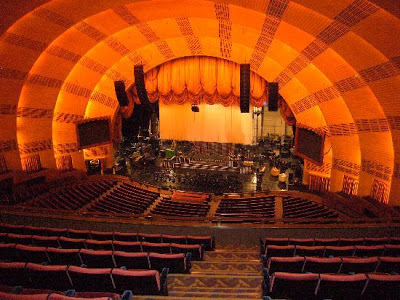
 But is this transformation
of the contemporary urban soundscape in the Western World, the result
of major cultural and technological changes that took place in the
beginning of 20th century? Emily Thomson, in her book The Soundscape of Modernity: Architectural Acoustics and the Culture of Listening in America, 1900-1933, agrees that the dramatic transformations in what people heard and how they listened, were the result of the prevalence of a new
aural culture. The new sound of the modern technology changed radically
the experience of sonic space. This is a fact that you can visually
notice for example when you experience the architecture of Boston’s
Symphony Hall, which was built in 1900s and the architecture of Radio
City Music Hall, which was built in the 1930’s. The architectural
composition of these two stages is mainly the result of acoustics but
its function changes entirely in these two cases.
But is this transformation
of the contemporary urban soundscape in the Western World, the result
of major cultural and technological changes that took place in the
beginning of 20th century? Emily Thomson, in her book The Soundscape of Modernity: Architectural Acoustics and the Culture of Listening in America, 1900-1933, agrees that the dramatic transformations in what people heard and how they listened, were the result of the prevalence of a new
aural culture. The new sound of the modern technology changed radically
the experience of sonic space. This is a fact that you can visually
notice for example when you experience the architecture of Boston’s
Symphony Hall, which was built in 1900s and the architecture of Radio
City Music Hall, which was built in the 1930’s. The architectural
composition of these two stages is mainly the result of acoustics but
its function changes entirely in these two cases.The result of this journey is that; the connection between soundscapes and architecture is not a new but an ancient one. While the soundscape of the world changes, as R. Murray Schafer has stated in his book that introduced the notion of soundscape, modern man should learn to inhabit a world with an acoustic environment radically different from any other era. I believe that contemporary architects should stop designing for people without senses and focus on real space rather than space constructed by bits!
References:
Blesser, Barry and Linda-Ruth Salter. Spaces Speak, Are You Listening?: Experiencing aural architecture. Cambridge: The MIT Press, 2007. Print.
Auguyard, Jean-Francois and Henry Torgue. Sonic experience, a guide on everyday sounds. Quebec: McGill- Queen’s University Press, 2005. Print.
Hellstrom, Bjorn. Noise Design: Architectural Modelling and the Aesthetics of Urban Acoustic Space. (Doctoral Dissertation, School of Architecture, Royal Institute of Technology, KTH) Gotenborg: Reproman AB, 2003. Print.
Thomson, Emily. The Soundscape of Modernity: Architectural Acoustics and the Culture of Listening in America, 1900-1933. Cambridge: The MIT Press, 2004. Print.
Schafer, R. Murray. The Soundscape: Our Sonic Environment and the Tuning of the World. Vermont: Destiny Books, 1977,1994. Print
Picture sources:
http://en.wikipedia.org/wiki/The_Enraged_Musician
Second photograph is courtesy of Alex Stogiannis; Stockholm’s central station January 2013.
http://bicycleresearchproject.blogspot.gr/2013/01/18-emily-thompsons-soundscape-of.html


